
| Density | Specific Volume |
|---|---|
| 845.40 lb/ft³ | 0.001183 ft³/lb |
Mercury is one of those materials that looks simple until a project depends on it. It is heavy, compact, and very sensitive to temperature. That makes it useful in reference work, lab checks, engineering notes, and quick comparisons where density matters. This page is built to make those numbers easy to read without forcing anyone to dig through a dense technical manual.


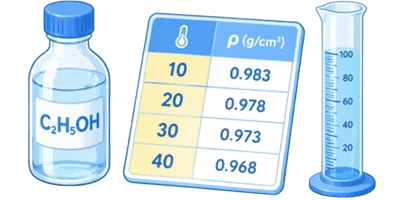
The main job of this reference is simple. It helps match mercury density with temperature and pressure so the right value is available fast. The calculator behind it shows the current density, the specific volume, and how the curve changes as inputs move. That makes the tool useful for quick checks, not just for people who already know the answer before opening the page.
Table of Contents
What this reference is for
This reference is useful any time mercury mass, volume, or behavior needs to be estimated. It helps with basic comparison, record keeping, and planning. The point is not to turn the page into a science textbook. The point is to give a clean working guide that makes the numbers easy to use.

Mercury is known for having a very high density. That means a small volume carries a lot of mass. It also means that even small changes in temperature can matter when exact values are needed. In practical terms, that is why a live calculator and a reference table work better than a single fixed number.
How to use the calculator
The process is very simple.
- Set the temperature.
- Set the pressure.
- Read the density in the table.
- Check the specific volume if volume conversion is needed.
- Look at the graph to see how the result changes around the current point.
That is all most users need. No extra steps. No guessing. The value changes as the inputs change, so the reference stays useful during a real task instead of becoming a static number that goes out of date the moment conditions shift.
Main terms on the screen
| Term | Plain meaning | Why it matters |
|---|---|---|
| Density | How much mass is inside a given volume | Used for weight, volume, and comparison |
| Specific volume | How much volume is inside a given mass | Useful when converting mass to space |
| Temperature | How hot or cold the mercury is | Mercury density changes as temperature changes |
| Pressure | The force applied to the fluid | Higher pressure can slightly raise density |
| Phase | Whether the material is solid, liquid, or vapor | Important when the temperature moves near limits |
Simple formulas that actually matter
The formulas behind the page are easy to read and easy to use.
| Formula | What it means |
|---|---|
| Density = mass / volume | Find how packed the material is |
| Specific volume = volume / mass | Find how much space 1 unit of mass takes |
| Mass = density x volume | Estimate total mass from known space |
| Volume = mass / density | Estimate space from known mass |
These are the 4 basic ideas users keep coming back to. When density is known, converting between mass and volume becomes much easier. That is the whole point of the calculator and table.
Mercury at a glance
Mercury is unusual because it is a metal that is liquid at normal room temperature. That alone makes it stand out. It has a freezing point near -38.83 C and a boiling point near 356.73 C. That wide range gives it a useful place in reference work, but it also means the phase message in the tool matters.
📉 When the temperature drops low enough, the calculator will show that mercury has solidified. When temperature climbs high enough, it will show that mercury is boiling and the displayed result will change with phase. That helps users know when the normal liquid density reading is no longer the right thing to trust.
What the live graph adds
A table gives the exact number. A graph gives the trend. That is why the live graph matters.
When the temperature slider moves, the curve changes immediately. When the pressure slider changes, the pressure graph updates too. This helps users see not just where the current value sits, but how sensitive it is to nearby conditions. That is a big deal in real work because many decisions depend on direction, not just the final number.
The red marker shows the current reading. The line around it shows the shape of the change. Together, those 2 pieces make the page much easier to use than a flat number with no context.
Reference values by temperature
The table below gives a practical temperature reference for liquid mercury at around normal pressure. Values are approximate and meant for easy comparison.
| Temperature °C (°F) | Density kg/m³ (lb/ft³) | Specific Volume m³/kg (ft³/lb) |
|---|---|---|
| -30 (-22) | 13655.00 (852.21) | 0.00007323 (0.001175) |
| -20 (-4) | 13636.50 (851.06) | 0.00007333 (0.001177) |
| -10 (14) | 13618.10 (849.90) | 0.00007343 (0.001179) |
| 0 (32) | 13599.80 (848.76) | 0.00007353 (0.001181) |
| 10 (50) | 13572.90 (847.09) | 0.00007368 (0.001183) |
| 20 (68) | 13545.88 (845.40) | 0.00007382 (0.001185) |
| 30 (86) | 13518.90 (843.72) | 0.00007396 (0.001187) |
| 40 (104) | 13492.10 (842.05) | 0.00007411 (0.001189) |
| 50 (122) | 13465.40 (840.39) | 0.00007426 (0.001191) |
| 60 (140) | 13438.80 (838.73) | 0.00007441 (0.001193) |
| 80 (176) | 13386.00 (835.43) | 0.00007470 (0.001198) |
| 100 (212) | 13333.70 (832.18) | 0.00007499 (0.001203) |
| 150 (302) | 13205.00 (824.17) | 0.00007572 (0.001215) |
| 200 (392) | 13078.00 (816.25) | 0.00007646 (0.001227) |
| 250 (482) | 12952.50 (808.42) | 0.00007720 (0.001239) |
| 300 (572) | 12828.40 (800.68) | 0.00007795 (0.001251) |
| 350 (662) | 12705.70 (793.03) | 0.00007870 (0.001263) |
Read this table as a working guide. Mercury gets slightly less dense as temperature rises. That is the main pattern to remember. The shift is not huge at low temperatures, but it becomes more useful when a task depends on precision.
Reference values by pressure
Pressure does not change mercury as strongly as temperature does in everyday use, but it still matters in a reference tool. The table below gives an easy pressure comparison at 20 C.
| Pressure MPa (psi) | Density kg/m³ (lb/ft³) | Specific Volume m³/kg (ft³/lb) |
|---|---|---|
| 0.1 (14.5) | 13545.88 (846.00) | 0.00007382 (0.001184) |
| 1 (145) | 13546.35 (846.03) | 0.00007381 (0.001184) |
| 5 (725) | 13548.03 (846.14) | 0.00007380 (0.001183) |
| 10 (1450) | 13550.12 (846.27) | 0.00007378 (0.001183) |
| 20 (2901) | 13554.29 (846.53) | 0.00007376 (0.001182) |
| 30 (4351) | 13558.45 (846.79) | 0.00007374 (0.001182) |
| 40 (5802) | 13562.60 (847.05) | 0.00007372 (0.001181) |
| 50 (7252) | 13566.74 (847.31) | 0.00007369 (0.001181) |
| 75 (10878) | 13577.05 (847.95) | 0.00007364 (0.001180) |
| 100 (14503) | 13587.30 (848.59) | 0.00007358 (0.001179) |
For most users, the temperature table will matter more than the pressure table. Still, pressure is worth keeping in view when the task is more detailed or when the work environment pushes values away from normal conditions.
How to read the phase message
The phase message is there for a reason. It warns when mercury is no longer behaving as a normal liquid at the current setting.
If the page says mercury has solidified, the temperature has moved below the freezing point. If the page says mercury is boiling, the temperature has moved beyond the boiling point. In both cases, the liquid density reading is no longer the right way to think about the material.
That is why the message should be read before any number gets copied into a report or estimate. It keeps the result honest and prevents a bad assumption from sneaking into the work.
Quick comparison table
| Condition | What usually happens |
|---|---|
| Temperature goes up | Density goes down |
| Temperature goes down | Density goes up |
| Pressure goes up | Density rises a little |
| Freezing point is reached | Mercury becomes solid |
| Boiling point is reached | Mercury becomes vapor |
Common ways people use this kind of table
This kind of reference is useful in a lot of settings. It can help with lab notes, material comparisons, educational work, and engineering calculations. It can also help users explain why a number changed when temperature or pressure changed.
Some people use it to check a value already written down. Others use it to estimate a value from scratch. Either way, the page is built for quick reading and fast comparison.
Good habits when using the chart
There are a few habits that make the tool more useful right away.
| Habit | Why it helps |
|---|---|
| Check the unit first | Stops simple reading mistakes |
| Read the phase message | Shows when mercury is no longer liquid |
| Use the table and graph together | Gives both exact value and trend |
| Compare nearby values | Makes the behavior easier to understand |
| Keep notes in the same unit system | Prevents conversion confusion |
Simple examples
Example 1, room temperature check
Set the temperature to 20 C and pressure to 0.1 MPa. The page shows a density close to 13545.88 kg/m³. That is the baseline many users start from.
Example 2, cooler condition
Lower the temperature to 0 C. The density rises a bit. That is normal. The live graph makes the change easy to see without digging for a second source.
Example 3, hotter condition
Raise the temperature to 100 C. The density drops compared with room temperature. The curve makes that trend clear right away.
Example 4, pressure comparison
Keep temperature fixed and raise pressure. The density nudges upward. For many users the shift is small, but for reference work it still matters.
What not to do
| Mistake | Why it causes trouble | Better move |
|---|---|---|
| Ignoring the phase message | The result may no longer describe liquid mercury | Check the state before using the value |
| Mixing units | The same number can mean something different | Keep temperature and pressure units consistent |
| Using one value for every condition | The answer loses accuracy | Read the current temperature and pressure |
| Reading the graph alone | The exact number is missed | Use the table and graph together |
| Assuming pressure changes everything | Temperature still drives most of the movement | Start with temperature first |
Short reference guide
| Input | What usually happens |
|---|---|
| Temperature up | Density down |
| Temperature down | Density up |
| Pressure up | Density up a little |
| Below -38.83 C | Mercury solidifies |
| Above 356.73 C | Mercury boils |
Why the specific volume field helps
Specific volume is the reverse side of the density story. It tells how much volume belongs to 1 unit of mass. That is useful when a task starts with mass instead of space. In many practical cases, that is the easier way to think.
For example, if a project knows the mass and wants the space it fills, specific volume gives a fast conversion path. If the project knows the space and wants the mass, density does the same job from the other direction.
Best way to use this page in real life
Start with the current temperature and pressure. Read the table. Watch the graph. Check the phase message. Then write down the value that matches the actual condition, not the value that seems convenient.
That workflow keeps the result clean and practical. It also avoids the most common error, which is treating a material like it never changes. Mercury changes, and this reference page is designed to show exactly how.
FAQ
Why is mercury density so high?
Mercury is a very heavy liquid for its size. That is why its density is much higher than ordinary fluids.
Does temperature really change the number that much?
Yes. The change is not dramatic in a tiny range, but it is enough to matter in reference work and precise comparison.
Why does pressure matter at all?
Pressure has a smaller effect than temperature in many everyday cases, but it still belongs in a proper reference tool.
What does vapor mean here?
It means mercury is no longer in liquid form at the current condition.
Can this be used as a quick calculator?
Yes. That is one of the main reasons it exists. It is made for fast checking and practical use.
References
- NIST Chemistry WebBook
- CRC Handbook of Chemistry and Physics
- Standard physical property tables for mercury
- Engineering fluid property references
- Basic thermodynamics and materials reference texts

David Parry — Senior Engineering Analyst
Specializing in electronics and physics-based simulations with 20+ years of engineering experience. David ensures the mathematical and physical accuracy of the tools at ProCalcLab.


