| Parameter | Value |
|---|
This tool models sound attenuation of a multilayer wall and estimates the residual noise level for a given source. The model accounts for the load-bearing wall material and thickness, the acoustic insulation type and thickness, and a simple frequency-dependent absorption law. Results are shown as a table and a chart across the 125–4000 Hz band. To measure an actual source level use an online sound level meter.

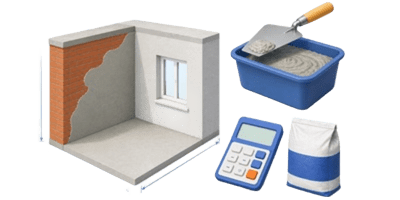

🧱 Enter wall material and thickness, select insulation type and thickness, then review predicted attenuation and remaining noise across standard frequencies. Results update instantly as parameters change.
What the calculator provides
- Estimated sound transmission loss (STL) at six standard octave frequencies.
- Residual sound level after the wall for the given input level.
- Side-by-side comparison of material and thickness options.
- Assessment of how the acoustic layer affects mid/high frequencies and overall isolation.
- Support for selecting a practical wall build for residential and technical spaces.
Calculation model
Wall attenuation
$$ L_{\text{wall}} = k_{\text{mat}}\cdot\frac{d_{\text{wall}}}{1000}\cdot\log_{10}\!\left(\frac{f}{80}\right) $$
Insulation attenuation
$$ L_{\text{ins}} = k_{\text{ins}}\cdot\frac{d_{\text{ins}}}{1000}\cdot$$
$$\cdot\biggl[\log_{10}\!\left(\frac{f}{200}\right) + 0.5\biggr]\cdot 8 $$
Total attenuation
$$L_{\text{total}} = L_{\text{wall}} + L_{\text{ins}} $$
Residual level
$$L_{\text{res}} = \max\bigl(0,\; L_{\text{in}} – L_{\text{total}}\bigr)$$
Here f is frequency in Hz, k are material coefficients, d are layer thicknesses in millimetres, and Lin is the source level in dB.

Worked example 1
Input
- Wall: solid brick, 200 mm (0.20 m), \(k_{\text{mat}}=50\)
- Insulation: dense mineral wool, 60 mm (0.06 m), \(k_{\text{ins}}=6\)
- Source level: 92 dB
Calculation highlights
- Base factors: \(d_{\text{wall}}=0.20\), \(d_{\text{ins}}=0.06\).
- Wall base: \(50\cdot0.20 = 10.0\).
- Insulation base: \(6\cdot0.06\cdot8 = 2.88\).
- At 1 kHz: \(\log_{10}(1000/80)\approx 1.20\).
- Attenuation at 1 kHz: \(L_{\text{wall}}\approx11.0\ \text{dB},\; L_{\text{ins}}\approx3.46\ \text{dB}\).
- Total at 1 kHz: \(L_{\text{total}}\approx14.46\ \text{dB}\).
- Example STL across 125–4000 Hz: 2.8, 6.7, 10.6, 14.4, 18.3, 22.2 dB (mean ≈ 12.5 dB).
- Residual noise: \(L_{\text{res}}=\max(0,92-12.5)\approx79.5\ \text{dB}\).
Worked example 2
Input
- Wall: cellular concrete, 220 mm (0.22 m), \(k_{\text{mat}}=30\)
- Insulation: EPS, 80 mm (0.08 m), \(k_{\text{ins}}=4\)
- Source level: 88 dB
Calculation highlights
- Bases: \(30\cdot0.22=6.6\), \(4\cdot0.08\cdot8=2.56\).
- At 1 kHz: \(L_{\text{wall}}\approx7.26\ \text{dB},\; L_{\text{ins}}\approx3.07\ \text{dB}\).
- Total at 1 kHz: \(L_{\text{total}}\approx10.33\ \text{dB}\).
- Example STL across bands: 2.0, 4.8, 7.6, 10.3, 13.1, 15.8 dB (mean ≈ 8.9 dB).
- Residual noise: \(L_{\text{res}}=\max(0,88-8.9)\approx79.1\ \text{dB}\).
Material coefficients
| Material | STL coefficient | Notes |
|---|---|---|
| Solid brick | 50 | Dense, heavy masonry |
| Hollow brick | 45 | Lightened block with cavities |
| Reinforced concrete | 48 | RC slab or wall |
| Aerated concrete | 30 | Cellular block |
| Sawn timber | 22 | Solid timber |
| Double drywall | 15 | Two 12 mm boards |
| Dense mineral wool | 6 | Acoustic slab |
| EPS (foam) | 4 | Standard polystyrene |
| Acoustic membrane | 7 | Mass-loaded vinyl type |
Guideline noise limits
| Use case | Max level, dB | Comments |
|---|---|---|
| Residential night | 30 | Recommended for sleep |
| Residential day | 40 | General comfort |
| Classrooms | 35 | Conducive to learning |
| Offices | 45 | Comfortable work |
| Outdoor residential day | 55 | Street noise near buildings |
| Industrial zones | 75 | Boundary of sanitary protection |
| Short-term max | 85 | Risk of hearing damage |
| Long-term safe | 60 | Continuous exposure guideline |
✍ Note: coefficients and limits are illustrative. Check local standards and regulations. If residual noise exceeds limits, increase thickness or add acoustic layers and address junctions and penetrations.
Limitations
- Model is simplified. Joints, openings, doors, windows and flanking transmission are not included.
- Installation quality, room modes and leaks strongly affect real results.
- Use for preliminary selection; for final design rely on measurements and manufacturer data.
Noise affects health. Chronic exposure raises stress, affects sleep and cardiovascular health. Effective insulation improves wellbeing and performance. Even short loud events can trigger stress hormone release and affect the nervous system.
Further reading
- Sound Insulation in Buildings — national handbooks and acoustic standards.
- Acoustics and Noise Control, R. M. White — practical guide to materials and measurements.
- Manufacturer application notes for acoustic membranes and mineral wool (Rockwool, Knauf, MLV).
- WHO environmental noise guidelines — public health exposure recommendations.

Markus Fletcher — Structural Design Specialist
Expert in structural integrity, 3D modeling, and applied mathematics. Markus focuses on creating precise tools for construction professionals and DIY engineers.